


OSRS Leagues 6: Demonic Pacts Skill Tree Explained
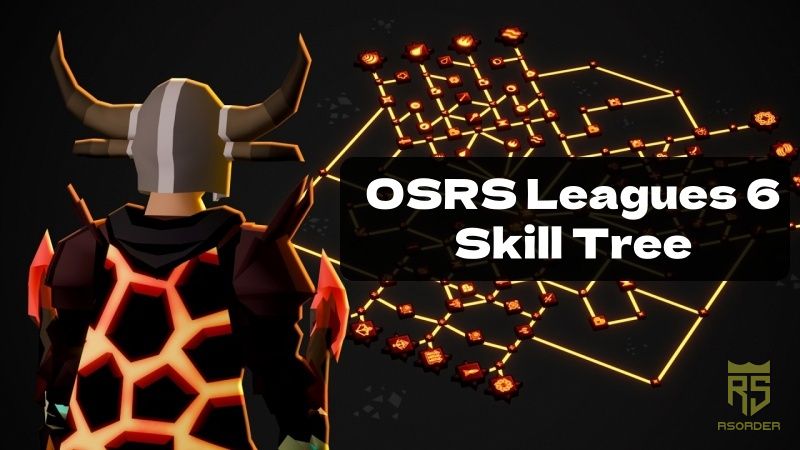
Apr-17-2026 PSTIn Old School RuneScape Leagues 6, the traditional Combat Masteries system has been completely replaced by a new progression framework called Demonic Pacts (often referred to as the Skill Tree). This system dramatically expands build diversity, moving away from linear perk selection into a highly modular, interconnected talent web.
Instead of choosing 9 options from 18, players now allocate 40 points across 130+ nodes, enabling deep specialization—or full hybrid experimentation. The result is one of the most flexible and complex combat systems ever introduced in Leagues.
How the Demonic Pacts Skill Tree Works
The Demonic Pacts system functions like a classic RPG talent tree:
· Each selectable upgrade is a node
· Major power unlocks are keystones
· Nodes must be connected before they can be selected
· All players begin at a central starting node and branch outward
This structure forces meaningful pathing decisions. You are not just picking power—you are designing an entire combat identity through progression routes.
Because nodes are interconnected, early choices heavily influence late-game potential. Planning is essential.
Points System and Progression
Players can earn up to 40 total points, distributed through regional task completion. These tasks vary significantly in difficulty, meaning region selection directly impacts build speed and flexibility.
Region Difficulty (Hardest → Easiest)
· Karamja
· Kourend
· Varlamore
· Asgarnia
· Desert
· Fremennik
· Morytania
· Kandarin
· Wilderness
This ranking is important: harder regions tend to offer more demanding tasks but may slow early progression.
Build Flexibility: Resets and Hybrid Play
Players are not locked permanently into their first decisions.
· You can reset your Skill Tree up to 3 times
· Each reset is tied to defeating a unique Echo Boss
· Builds are fully customizable after each reset
Hybrid Builds Are Strong This League
Unlike previous systems, Demonic Pacts heavily support hybridization. While full specialization is still powerful, players can now:
· Invest in multiple keystones
· Combine different combat identities
· Unlock synergistic interactions between styles
This makes experimentation a core part of progression rather than a niche strategy.
Magic Keystones Overview
Magic is no longer centered around a single dominant setup. Instead, elemental identity defines build direction, making enemy weaknesses far more relevant.
Air Keystone
Air focuses on prayer synergy and consistency in max hits:
· Bonus max hit chance scales with Prayer bonus
· Damage increases based on active prayers
· Smoke spells become Air spells
· Rune regeneration can restore Prayer points
Playstyle: Sustained DPS with prayer optimization and scaling consistency.
Water Keystone
Water is the defensive and sustain-oriented magic path:
· Water spells heal 60% of the damage dealt
· Bonus damage while at full HP (scales with overhealing)
· Ice spells convert into Water spells
· Rune regeneration provides healing
Playstyle: Tank mage with strong self-sustain and safe PvM potential.
Fire Keystone
Fire is the highest raw DPS option:
· Burning damage spreads and stacks
· Fire spells hit multiple nearby targets
· Blood spells count as Fire spells
· Fire Surge gains bonus flat damage scaling
Playstyle: High-risk, high-reward burst DPS with self-damage tradeoffs.
Earth Keystone
Earth is built around defense scaling and debuff control:
· Damage scales with your Defence level
· Reduces enemy Defence and Magic Defence
· Temporary Defence boosts from Surge casts
Playstyle: Tank-mage hybrid with strong debuff utility and scaling survivability.
Ranged Keystones Overview
Ranged functions as a flexible supporting combat style with multiple distinct identities. A key mechanic is that ammo regeneration can trigger echo hits, significantly increasing DPS potential.
Bow Keystone
The bow path emphasizes precision and sustained scaling:
· Increasing min/max hit per successful attack (up to a cap)
· Faster attack speed (notably strong with Bow of Faerdhinen-type weapons)
· Ranged echoes cannot miss
Playstyle: Skill-rewarding DPS that scales with accuracy and uptime.
Crossbow Keystone
Crossbows are slow but devastating:
· Guaranteed max hits with dual accuracy rolls
· +70% damage but slower attack speed
· Increased chance to trigger ranged echoes
Playstyle: Burst execution build with extreme consistency.
Throwing Weapon Keystone
Designed as a hybrid support archetype:
· Hits additional nearby targets
· Scales with melee Strength via conversion
· Flat accuracy boost
· Echoes can max hit
Playstyle: Melee-ranged hybrid tank that scales off melee stats.
Melee Keystones Overview
Melee is the most diverse combat category, split into multiple identity paths. It supports some of the most extreme scaling mechanics in the entire system.
Thorns Keystone
Thorns turns defense into offense:
· Reflect damage on every hit received
· Scales with Defence level
· Enhances recoil and vengeance effects
· Double-hit thorn interactions
Playstyle: Reflect tank that punishes enemies for attacking you.
Special Attack Keystone
This path rewards aggressive weapon cycling:
· Special attack energy restored per hit
· Faster attack speed for light weapons
· Chance to not consume special attack energy
· Bonus extra hit on light weapons
Playstyle: High-frequency burst damage with near-infinite spec cycling potential.
Blindbag Keystone
A chaotic RNG-driven damage system:
· Chance to trigger automatic heavy weapon attack
· Damage scales with the number of heavy weapons carried
· Can produce extremely high burst hits
Playstyle: High-variance “proc build” capable of unexpected one-shots.
Halberd Keystone
Extends melee into a pseudo-ranged combat style:
· Increased minimum hit scaling with distance
· Extended melee range up to 7 tiles
· Higher max hit scaling at range
· Standardized attack speed for slow weapons
Playstyle: Safe-distance melee DPS with strong scaling at range.
Conclusion
The Demonic Pacts system fundamentally changes how combat progression works in Leagues 6. Instead of linear upgrades, players now construct fully customized combat identities through interconnected keystone paths.
With:
· 40 points to allocate
· 130+ nodes
· Multiple keystone archetypes per combat style
· Limited but meaningful respecs
Every build becomes unique, experimental, and highly replayable. Expect future meta shifts to revolve heavily around hybrid combinations, especially between defensive and elemental synergies. If you're trying to fund bonds for your alt accounts but don't have enough gold, our OSRS Gold Store provides reliable and inexpensive OSRS gold to elevate your gaming experience.
RSorder Team